Features
APIA Leichhardt were losing 10 young players a year. They changed their approach and the results are telling
By Sacha Pisani4 November 2026
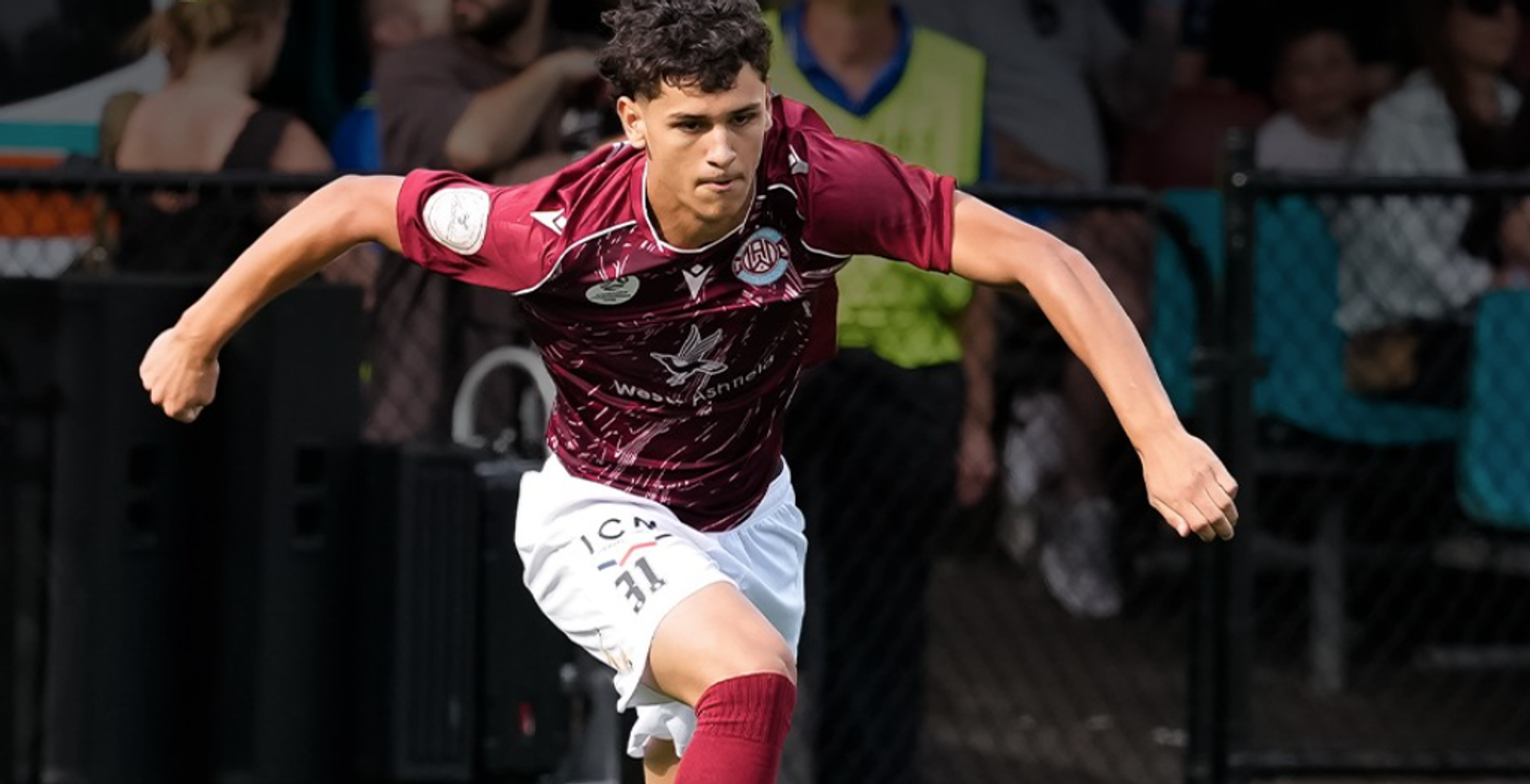
You only have to look at some of the young guns now playing in the A-League or the list of youngest Australian Championship debutants to get a glimpse of what APIA Leichhardt are doing.
At NPL NSW powerhouse APIA, the pathway from youth football to the professional game is no longer just an ambition, it's becoming a reality… clearly.
Two of the youngest players in Australian Championship history, Cristian Lombardo and Orson Conroy, have emerged from the club's youth setup this year. Four of the five youngest players to have made Championship appearances are APIA talents produced at Lambert Park, while a growing list of APIA players are making the leap into the A-League - think Max Court and Oscar Gonzalez.
But behind those achievements is a deliberate shift in philosophy.
For years, APIA were losing some of their brightest prospects to A-League academies. Around 10 players every season were leaving the club before they could establish themselves in senior football.
Rather than accepting that reality, APIA began asking a different question.
"One of the biggest challenges we faced in previous years was losing some of our best young players to A-League academies. On average, we were seeing around 10 players a season make that move," APIA's Senior, Youth and JDL Technical Director and Under-20s head coach Dean Zammit told HIGHPRESS.
"Now, that's obviously a fantastic achievement for the club and something we continue to celebrate.
“But internally, we started asking ourselves a different question: How can we keep some of these players longer and provide them with an alternative pathway into senior and professional football?”
"That's where our approach began to evolve."
The results are increasingly difficult to ignore.
Australia youth international Lombardo made his Australian Championship debut aged just 16 years, 10 months and 12 days, becoming the competition's third-youngest debutant on the current list.
Conroy followed at 16 years, 10 months and 19 days, placing fourth.
Remarkably, four of the five youngest players on the list have represented APIA, with Court and Gonzalez also featuring having gone to join Brisbane Roar and Newcastle Jets respectively this season.
For Zammit, those opportunities are the product of a system designed to challenge talented youngsters long before they would traditionally reach senior football.
"Rather than having players progress through every age group traditionally, we started identifying those who were ready to be challenged much earlier,” he explained.
"Max Court and Oscar Gonzalez are probably the best examples. Both were promoted directly from our U15s and U16s into the senior setup. We wanted to expose them to the physicality, intensity and demands of senior football much earlier than they otherwise would have experienced.
"That approach has also helped us retain talented players like Cristian Lombardo and attract players back to the club, such as Orson Conroy, because they can see a genuine opportunity to progress.
“We even had a 14-year-old playing consistently in our U18s this season. For us, it's about recognising when a player needs a greater challenge rather than simply looking at their age.”
From APIA to the A-League
APIA’s approach is already producing results beyond the Australian Championship.
Presley Ortiz - the joint-2026 NPL NSW Golden Boot winner - has secured a move to Central Coast Mariners, following a pathway previously taken by the likes of Ben Gibson and Joel Bertolissio.
Zammit believes reigning NPL NSW premiers APIA have become particularly effective at providing a second opportunity for players who have previously been part of professional academies.
"It's something we're incredibly proud of as a club, and I think it reflects the work that's been done over the last few seasons to create genuine pathways for young players,” he said.
"With Presley Ortiz moving to the Central Coast Mariners, that's probably an area where APIA has been extremely successful in recent years.
“We've been able to identify young players around the ages of 20–22 who have come out of A-League academies, provide them with a senior football environment where they can develop, gain experience and ultimately earn their way back into the professional system.”
"Ben Gibson and Joel Bertolissio are great examples of players who have taken similar pathways in previous seasons."
But the progress of Aussie young guns Court and Gonzalez carries particular significance.
Unlike players who arrived after spending time in A-League academies, the pair developed within APIA's own youth system before earning senior opportunities.
"With Max Court and Oscar Gonzalez, their journeys are probably even more significant for us because they've really been the pioneers of the model we've been working towards: developing players from within, promoting them into senior environments earlier and challenging them to understand what it takes to reach the next level,” said Zammit.
"Both boys came through our youth program, were given opportunities at a young age and, to their credit, grabbed those opportunities with both hands.
"There's a lot of satisfaction in seeing players you've worked with for years take that next step.
“But equally, I think it reinforces our belief that if you provide talented young players with the right environment, the right challenges and people who genuinely believe in them, there's no reason they can't progress from NPL youth football into professional football.”
And the numbers underline just how far the program has come.
"Our U20s squad this season was approximately 90% homegrown players. That's something we're particularly proud of because it demonstrates that we're not simply recruiting talent to achieve results,” he added.
"We're developing players over several years and providing them with a genuine pathway into our senior program."
The work nobody sees
Producing players capable of making that jump requires considerably more than identifying talented teenagers.
For Zammit, much of the most important work happens away from matchdays.
"An enormous amount, and I think that's probably the part people don't always see or fully appreciate,” he explained.
"There's so much work that goes on both on and off the pitch, and a lot of it comes down to the extra hours that people at the club genuinely enjoy putting in because they care about the players and their development.
"It's the late-night conversations with players and their families, the constant communication between coaches and staff, and the reassurance young players sometimes need when things aren't going their way.
“Player development is never a straight line. There are highs, lows, setbacks and moments where players question themselves. Being there to support them through those periods is just as important as the coaching they receive on the pitch.”
APIA's development program extends to individual plans, video analysis, physical testing, strength and conditioning, nutrition, performance data, player workshops and parent education.
Zammit says the people involved are just as important as the resources available.
"One thing we've placed enormous importance on is the people we bring into the club, both players and staff,” he said. “What are they like as people? Do they believe in what we're trying to build? Are they prepared to put the team and the development of players first?
"Because ultimately, when you have the right people who genuinely believe in the culture and the pathway, the processes become much easier to implement."
That philosophy also shapes APIA's recruitment.
"We have an extensive identification process when opposition teams play against us,” Zammit continued. “If we identify someone of interest, we'll often go and watch them play again without announcing we're there.
“That's important because we're not just evaluating the footballer. We want to understand the person. How do they interact with teammates? How do they respond to their coach? How do they treat referees? What's their body language like when things aren't going their way?”
"Those characteristics tell you a lot about whether a player will fit into the environment we're building."
Closing the gap between youth and senior football
One of APIA's most significant structural changes has been combining the U20s head coaching and Technical Director responsibilities.
Zammit believes that decision has helped remove a longstanding disconnect between youth development and the senior team.
"We were one of the first clubs to move towards that structure, and I think it's been instrumental in aligning the youth and senior programs,” he said.
"It provides the players and their families with confidence that there's a genuine connection between what we're doing in youth football and what opportunities exist at senior level.
"In my role, I'm watching every youth team throughout the season, which gives me a really strong understanding of the players coming through, where they're at in their development and who might be ready for that next challenge."
He added: "In previous years, I think there was a gap between our youth and senior programs. We were producing some very talented young players, but the pathway wasn't always clear enough.
"That contributed to players leaving, and our U18s and U20s weren't necessarily performing at the same level as other areas of the club.
“Over the last three to four years, that's changed dramatically.”
Court and Gonzalez were among the first major beneficiaries.
"When we promoted Max and Oscar into the U20s, Max went on to win Player of the Competition at just 16 years old, while Oscar finished as the third-highest goalscorer despite missing almost half the season,” Zammit said.
"Both performed so well that they spent the entire season training with our First Grade squad.
“We're now consistently seeing five or six U20s players training full-time with First Grade, which is a massive step forward from where we were a few years ago.”
But creating opportunities requires more than a functioning youth program.
It also requires a senior coach willing to trust young players when results are on the line.
For Zammit, APIA head coach Franco Parisi has been fundamental to that process.
“He has been absolutely instrumental,” he said.
"I genuinely believe Franco is one of the best in the business when it comes to managing and developing young players. His guidance, professionalism and understanding of what each player needs, and importantly when they need it, is second to none.
"He knows when to challenge a player, when to support them, when they're ready for an opportunity and when they might need a little more time.
“That relationship between the youth program and First Grade is critical. Without that belief and trust at the top, the pathway doesn't work.”
Zammit continued: “The conversations are daily. Franco and I speak every day about our younger players coming through the system.
"Who's performing well? Who deserves an opportunity? Who can we challenge further? How are they handling training? How are they performing on matchdays? Who might benefit from exposure to the First Grade environment?
"It's an ongoing conversation rather than something we sit down and discuss once every few weeks."
That dialogue also extends to youth coaches and Nick Rizzo, who oversees the junior program.
"Sometimes that's promoting a player into an older age group, inviting them to train with the U20s or exposing them to the First Grade environment,” he said.
"Other times it's about recognising that a player needs more time, more confidence or a different type of challenge.
“I think that's an important part of development that sometimes gets overlooked. It's not just about pushing players up as quickly as possible. It's about knowing when to challenge them, how much to challenge them and making sure they still have the confidence to express themselves.”
The importance of experience
While APIA's younger players are attracting attention, Zammit believes the club's experienced senior footballers deserve considerable credit.
Sean Symons, Themba Muata-Marlow, Michael Kouta and Adrian Ucchino have all played important roles in creating an environment where emerging players can develop.
"These are experienced senior players who set standards every single day. Our younger players get to train alongside them, learn from their professionalism, understand their habits and see firsthand what is required to perform consistently at senior level,” Zammit added.
"That daily exposure is invaluable."
It is an approach that connects recruitment, development and senior performance rather than treating them as separate priorities.
"Ultimately, I don't think there's one secret to our success. It's the alignment of the entire club, the people involved, the opportunities we provide and the belief that young players can contribute to winning football matches,” he said.
“We're not promoting young players simply because they're young. We're promoting them because we believe they're good enough, and we're prepared to give them the opportunity to prove it.”
For APIA, the recent Australian Championship debuts of Lombardo and Conroy are another indication that the pathway is working.
And with players continuing to progress into professional environments, Zammit believes the club are only beginning to realise their potential.
"Over the last three to four years, we've made enormous strides in strengthening those connections and creating a pathway that everyone within the club understands and believes in,” he said.
"And I think we're now starting to see the rewards of that work, with so many young players making their senior debuts, establishing themselves in First Grade and ultimately progressing into A-League environments.
"The most exciting part for us is that we believe there's still so much room to improve. We're proud of what's been achieved, but we're certainly not satisfied.
"Our aim is to continue building a football club where talented young players know that if they're good enough, work hard enough and show the right attitude, there's a genuine opportunity for them to progress all the way through our system and into professional football."